
By Clara Orndorff, Placement Student
As part of my undergraduate studies in Art History, I had the opportunity to work at Lambeth Palace Library for a 12-week placement. Working alongside the Printed Books team, I was able to dive into the collection by cataloguing illustrations, in the hope of creating more detailed catalogue notes for interested researchers and students.
Lambeth Palace Library is privileged to have a remarkable reserve of rare early printed material with particularly spectacular woodcut illustration. Over the last three months, I have had the pleasure of working with the Library’s earliest illustrated material, ranging from as early as 1470 up to 1525. These books come with a complex historical and artistic context, merging Late Medieval subjects with the technological innovation of the printing press and the beginnings of the Renaissance movement. To produce a woodcut print for a printed book, the artist must draft the illustration on a piece of solid wood, then carefully carve away the negative space before the finished block is inked. Due to the laborious and precise nature of this process, we see very stylistically distinct illustrations; marked by thick lines, linear shading, and subtly rounded figures. This highly recognizable style of image blends a traditional Medieval simplistic flatness with a near-Renaissance mathematical sensibility.
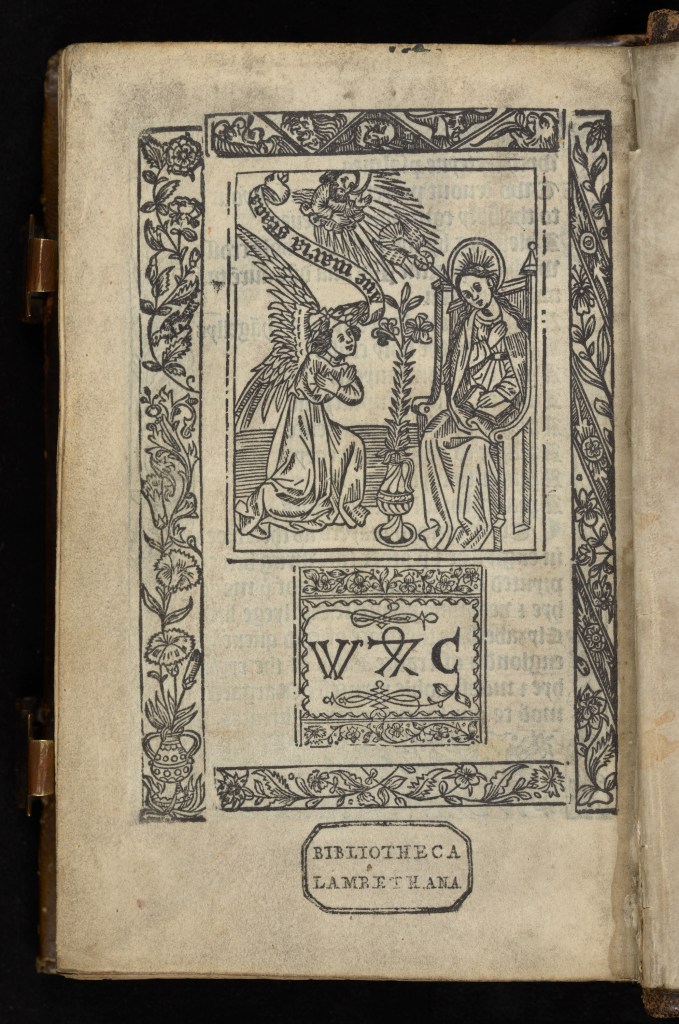
My task involved looking through each item and assessing the number of illustrations in a given volume, the subject of these illustrations, their location within the item, as well as any other notable information that may be helpful for the Library. To begin the process, I would first check the Library’s digital collections as well as other online databases to see if the book was available as a public digitised copy. Acquiring this information will hopefully be an aid in assessing which items are the highest priority to photograph and digitise. Then I would check through each book, noting each illustration and its subject. I quickly noticed it was crucial not just to analyse iconography, but also the text around the illustrations, to ensure full accuracy of context.
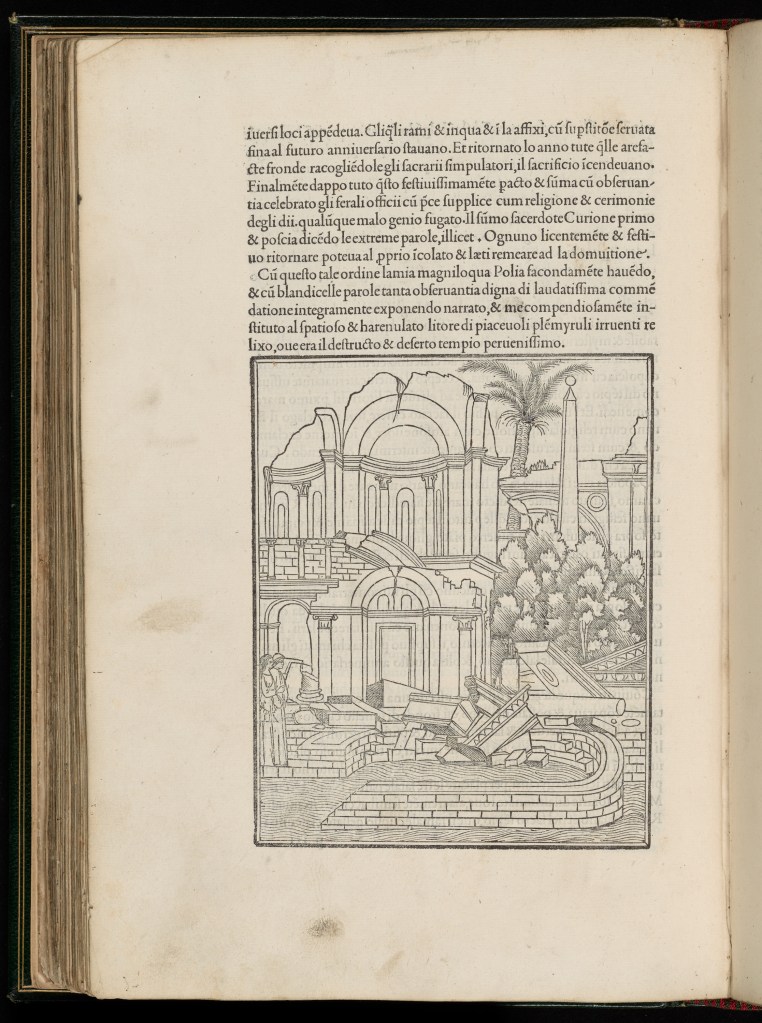
One roadblock in this task was translating text from Latin into English. In order to pull text from the pages surrounding the images, it was necessary to become extremely familiar with Medieval printing shorthand symbols and conventions. For example, a “3” shape at the end of a word can represent a “m/n” or “et” ending. Knowing these conventions allowed me to accurately understand the context of the images and became a huge asset to the project.
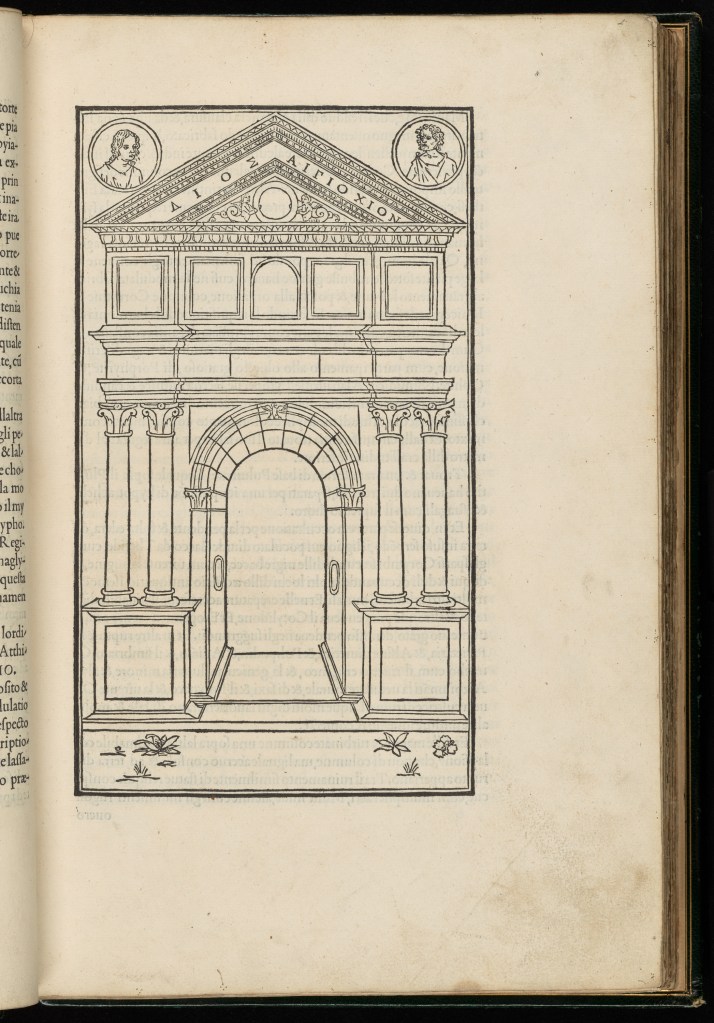
One of the interesting aspects of this project has come from working with these texts chronologically and observing the evolution of the art style. Even in the earliest stages, there was dedicated attention to detail and facial expression in the figures, designed to move the viewer emotionally. Some of my favourite illustrations come from a relatively later work, Hypnerotomachia Poliphili (1499), a complex, allegorical Renaissance novel. Published about 50 years after the invention of the Gutenberg Press, it is clear to see a stylistic evolution from some of the earlier woodcuts. Already, you can see the implementation of one-point linear perspective, more complex shading patterns, and finer details. There is clear attention to mathematical proportion and classical influence, which also plays a significant role in the narrative of this story. The text and image, as separate entities, each tell a valuable piece of the story, but when appreciated in tandem, they open another layer of metaphor and surrealism to the work.
Through my work with these books, I hope to make these wonderful woodcuts more accessible to researchers, viewers, and the Library’s social media team. These images can be a helpful resource for understanding printing technology and conventions, as well as understanding the anthropological context of the Medieval and Renaissance periods. I believe it is important for these works to be celebrated and studied as other fine art forms are, and by adding these descriptions to the Library’s catalogue, these images will be easily searchable and accounted for.

