
By Matthew Harper, Archives Assistant
The East End of London was, especially in the second half of the 19th century, seen as an area lacking in both economic and spiritual sustenance. With the opening and flourishing activity of the various docks in Poplar, the Isle of Dogs, and further east, communities of workers and their families, dependent on work in or relating to the maritime trade that emanated from the docks, grew larger. Members of these communities were often economically disadvantaged, and the provision of churches was often far below what was needed. Nearby Bethnal Green was described by an Anglican priest in 1879 as “a howling wilderness; alleys; pauperism rampant; religion nil”.[1]
It was in this context that the Christ Church, Oxford mission to East London began in the early 1880s. Similarly to the settlement at Oxford House in Bethnal Green, it was influenced theologically by the Tractarian movement.[2] In the early days, the funding for the mission primarily came from within Christ Church, Oxford, but with the growth of the mission, some money was sought to pay for the building of a church to act as a permanent home. A leaflet, kept in the collections of Lambeth Palace Library as part of the FP Temple papers, explains the need for a new church and includes a list of donors.[3]
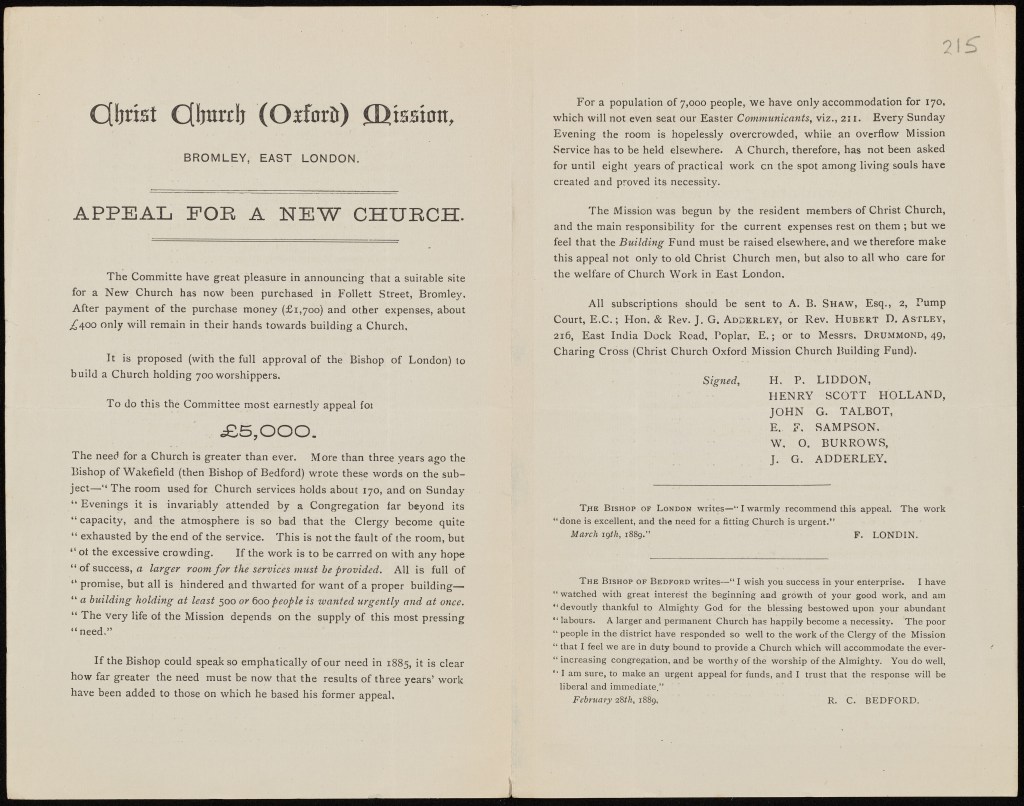
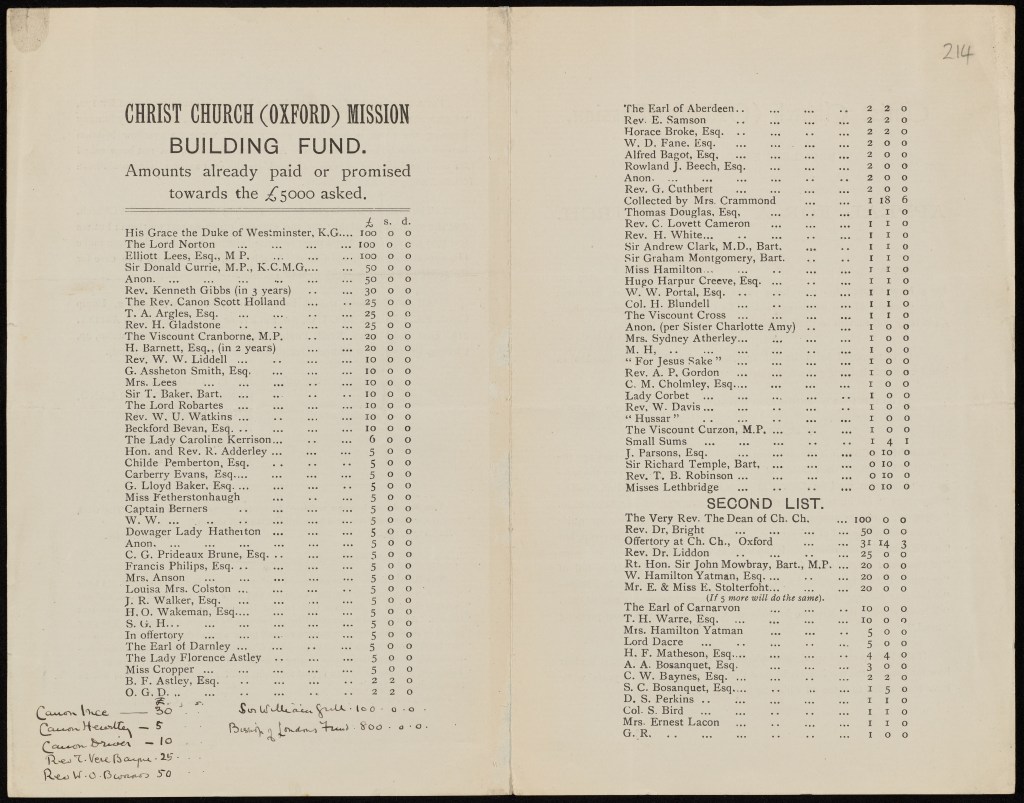
The location chosen for the new church, on the corner of Lodore Street and Follett Street, was very near to the East India Docks. Once completed in 1893, the church was named St Frideswide after the patron saint of Oxford.[4] One of the organisers of the original mission was Henry Liddell, Dean of Christ Church from 1855 to 1891, and father of Alice Liddell (the inspiration for Lewis Carroll’s Alice). The church had a carved door featuring St Frideswide, long thought to be by Alice, but in fact carved by her sisters Rhoda and Violet, which is now at St Frideswide’s Church, New Osney, Oxford. It survived the bombing of the church in World War II, after which the building was sadly demolished.
The mission aimed to serve the local people, many of whom found employment in the docks or in related industries. Early on, the work at St Frideswide, like many of the other missions from the Oxford and Cambridge colleges, branched out from ‘religious missionary endeavours’ into a broader variety of ‘social and educational activities’.[5] This involved various clubs and activities that were aimed at alleviating the hardships facing the local community. These were popular both with the local people, but also with those responsible for funding their ongoing endeavours.[6] The aim of these was to create a mission that blended faith with philanthropic work, addressing both the spiritual and material needs of the local area.
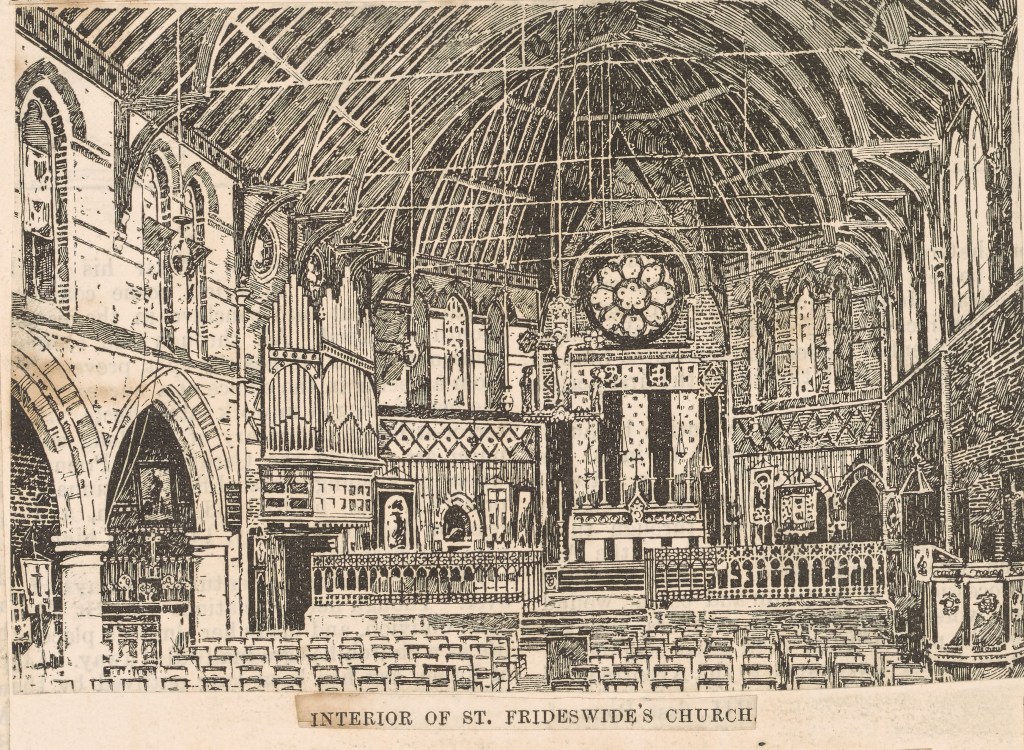
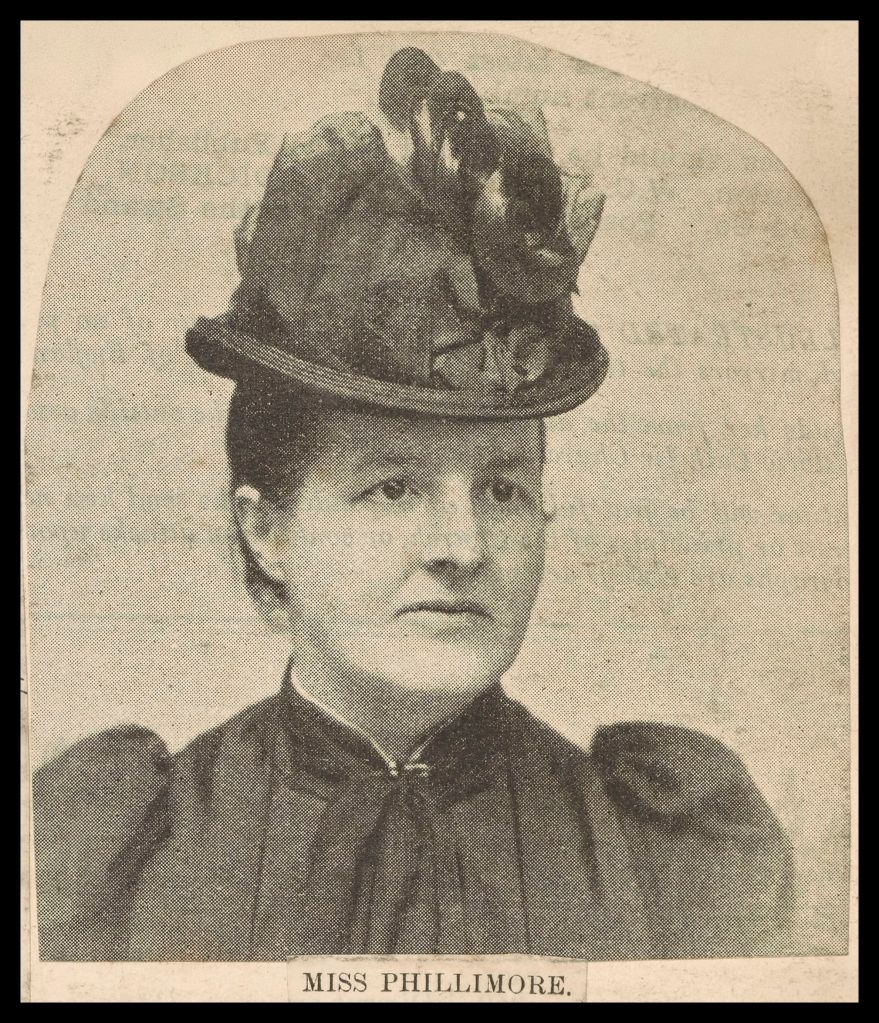
The church continued to be Anglo-Catholic in nature, including practices such as the reservation of the sacrament, which caused St Frideswide’s to be included as evidence in the Royal Commission on Ecclesiastical Discipline just after the turn of the 20th century.[7] The success, and theological leanings of the church, was likely what attracted religious orders to the immediate vicinity. This led to the necessity of expanding further than the initial church building, and by the early 20th century several other buildings had been built, with the philanthropist Miss Catherine Phillimore (1847-1929) being a significant contributor (pictured below).[8] It was in one of these buildings that sisters from the Community of St John the Divine were hosted until the later part of the 20th century.[9] This provided the inspiration for the fictional order of nuns in the BBC series Call the Midwife, and the books that it is based on.[10]
The relationship between maritime communities and religion is further explored in our latest exhibition, Mariners: Religion, Race and Empire at Lambeth Palace Library. The exhibition is open until Friday 11 September, and is presented in collaboration with the University of Bristol.
[1] Scotland, Nigel, Squires in the slums: settlements and missions in late-Victorian London (London, 2007), p. 55.
[2] Ibid, p. 75.
[3] LPL FP Temple 38, ff. 214-215.
[4] Scotland, Squires in the slums, p. 72.
[5] Ibid, p. 76.
[6] Ibid, p. 77.
[7] Cruickshank, Dan, ‘Caring for the Sick and Dying in Early Twentieth-Century Anglo-Catholic Parishes’ in The church in sickness and in health, edited by Charlotte Methuen and Andrew Spicer (Cambridge University Press, 2022), p. 338.
[8] Scotland, Squires in the slums, p. 75.
Marshall, Peter, “Back to Poplar In 1988.” >Re-PHOTO | “Rays” on Photography and Photographers. February 23, 2022, http://re-photo.co.uk/?p=13059 [Accessed 14/08/2026]
LPL MS 5223, p. 125.
[9] Scotland, Squires in the slums, p. 75.
[10] Pink, Andrew. “All Saints, Poplar.” Andrew Pink. October 25, 2016. https://andrewpink.org/poplar/ [Accessed 14/08/2026]

